
Inside the INEC Data Leak: Insider Threats, Political Drama, and the Fate of Nigeria’s 2027 Elections

Nigeria’s political space just collided head-on with cybersecurity reality, and the fallout is messy.

Recent reports surrounding the alleged unauthorized disclosure of a voter's information from the Independent National Electoral Commission (INEC) have once again brought data privacy, insider threats, and cybersecurity governance into the national conversation. What started as a standard voter registration transfer for Nollywood actor-turned-politician Emeka Ike has mutated into a high-stakes national security scandal.
With the Department of State Services (DSS) stepping in and political heavyweights trading blows, this incident exposes a terrifying truth: the biggest threat to Nigeria's data security isn't anonymous external hackers; it is the people who already hold the keys.
Nigeria's digital transformation has accelerated rapidly in recent years. From banking and healthcare to public services and elections. Technology now powers many of the systems citizens rely on every day. With this progress, however, comes an equally important responsibility: protecting the sensitive data entrusted to these digital platforms.
The Real Drama!: A Nollywood Star, a Political Aide, and an X Post
According to reporting by Vanguard Nigeria, a screenshot containing personal voter information allegedly obtained from INEC's Continuous Voter Registration (CVR) system was shared publicly on social media during a political dispute.
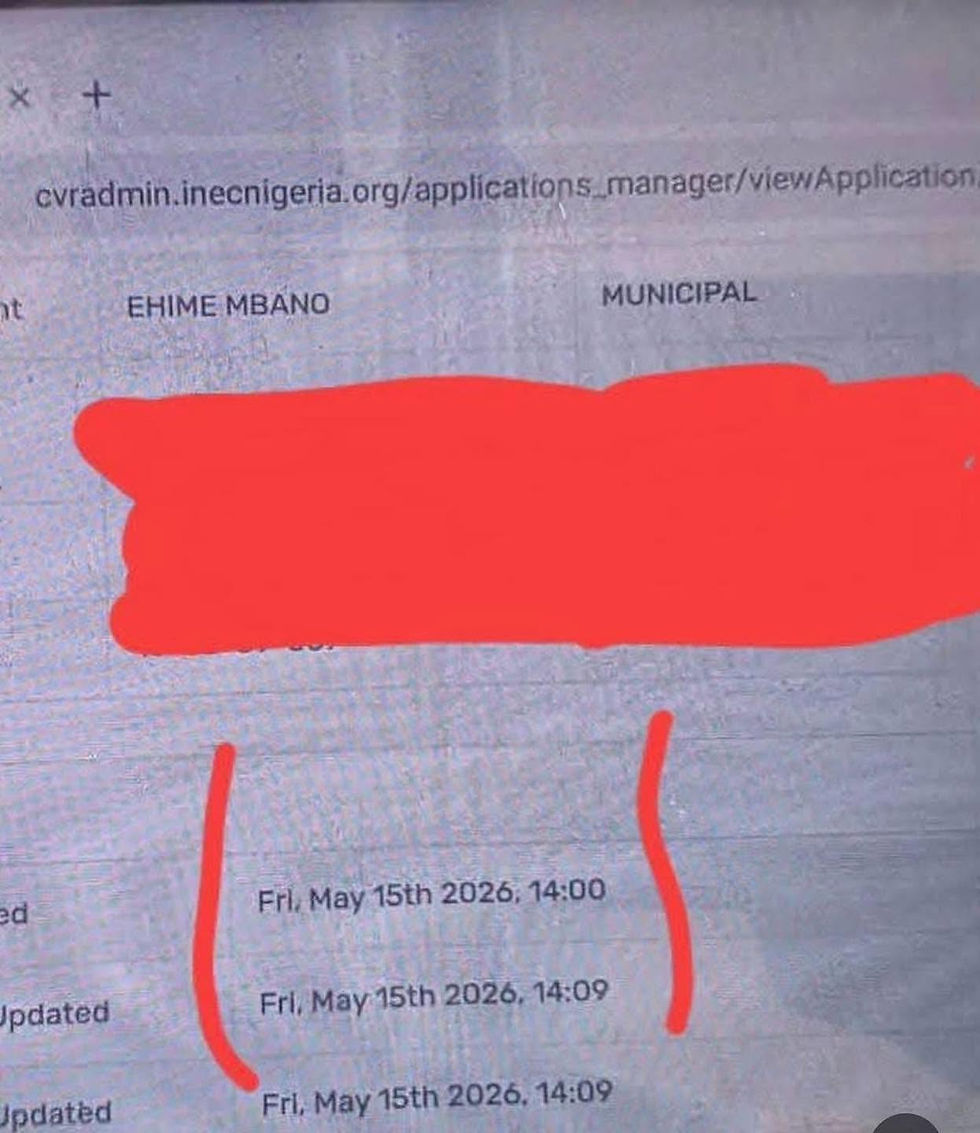

The publication immediately sparked widespread concern about the security of Nigeria's electoral database and the privacy of citizens' personal information.
Following public reactions, INEC released a statement clarifying that preliminary investigations found no evidence of external hacking or a cyberattack against its ICT infrastructure.
Instead, the Commission stated that the information appeared to have been accessed using valid user credentials assigned to personnel participating in the Continuous Voter Registration exercise, suggesting that the issue stemmed from an authorized account rather than an external compromise.
INEC also confirmed that its internal audit trail enabled investigators to identify the specific account involved, while the Department of State Services (DSS) commenced a parallel investigation into the matter.
This controversy began when Lere Olayinka, a media aide to the FCT Minister Nyesom Wike, shared screenshots on X (formerly Twitter) to challenge the political standing of actor Emeka Ike, who had recently contested a primary election in Abuja. Olayinka's post indicated that Ike had only transferred his voter registration to the FCT fifteen days prior, questioning his eligibility.
While investigations continue, the case raises broader cybersecurity questions that extend well beyond a single institution.
“Emeka Ike was a registered voter in Imo State. He only transferred his INEC Registration to the FCT on May 15, 2026. And he wants to contest for House of Reps in Abuja! Someone who has never voted in the FCT o. What happened to his Imo State? This Obidient people enh!!!” — Lere Olayinka via X (Twitter) |
What Exactly Was Exposed?
The images posted included data originating from an internal INEC administrative backend portal. While the full, unredacted images contained sensitive, private information that should be masked to comply with the Nigeria Data Protection Act (NDPA), the leaked data included:
Voter Identification Number (VIN)
Private System Application Number
Specific CVR Registration Centre
Backend Profile Picture & Full Legal Name
Exact Time and Date of the Digital Application
Emeka Ike later described the leak on Channels Television as "political rascality" and a violation of his privacy, threatening legal action.
The Cybersecurity Reality: The Danger of the Privilege Creep
INEC's preliminary investigation revealed a critical insider threat rather than an external hack, confirming that authorized credentials were used to access the data. An internal audit pinpointed the user account responsible for extracting the records. While INEC assured that the broader database remains secure, this incident highlights significant vulnerabilities in access control and privilege management within the commission.
Political Shockwaves: Is 2027 Already Compromised?
The incident has caused significant concern, with former Vice President Atiku Abubakar suggesting the breach undermines the credibility of the 2027 elections. Through his aide, Phrank Shaibu, Atiku linked the leak to political threats made by Nyesom Wike against his political opponents, raising concerns about the potential for further, more serious manipulation of voter data by insiders ahead of the general elections.
The Tech Fix: How INEC Can Rebuild Trust
To address these vulnerabilities, security experts recommend that INEC implement several measures:

Zero Trust Architecture: Continuously verify every request for data, regardless of the user's location.
Granular Role-Based Access Control (RBAC): Limit access to data based on the specific job functions of the user.
Dynamic Data Masking and Watermarking: Implement measures to prevent unauthorized data extraction and track user activity.
Strict Enforcement of the NDPA: The Nigeria Data Protection Commission (NDPC) should ensure strict adherence to data protection regulations, with penalties for violations.
The Department of State Services (DSS) is investigating the leak, and INEC has promised to release its findings. Again, this event highlights the critical need for robust data protection measures as Nigeria continues to digitize its electoral processes, ensuring that secure systems are not compromised by internal actors.
Source Material: For more details on the unfolding investigation, view the original breaking report published by Vanguard News Nigeria
Timeline of Events
Late June 2026
Lere Olayinka shares screenshots appearing to contain an individual's voter information.
↓
Public reaction intensifies
Questions emerge about possible compromise of INEC's voter database.
↓
INEC issues statement
No external hack detected.
↓
Internal audit begins
Audit trail identifies an authorized account.
↓
DSS joins investigation
Parallel investigation commences.
↓
Investigation ongoing
INEC promises to publish final findings.
Understanding Insider Threats
An insider threat occurs when someone with legitimate access to an organization's systems, data, or infrastructure intentionally or unintentionally compromises security.Insider incidents generally fall into three categories:
Malicious insiders
Individuals who deliberately misuse access to expose, steal, manipulate, or sell information.
Negligent insiders
Employees who unintentionally expose information through mistakes, poor security practices, or failure to follow procedures.
Compromised insiders
Authorized accounts that have been hijacked after passwords or credentials are stolen by attackers.
Each presents unique risks—and each requires different defensive strategies.
Why Access Control Matters
Large organizations often need hundreds or even thousands of employees to access sensitive systems to perform their daily responsibilities.
However, access should never be unlimited; Modern cybersecurity follows the Principle of Least Privilege, ensuring users receive only the minimum level of access necessary to perform their assigned duties.
Effective access management also includes:
Role-Based Access Control (RBAC)
Multi-Factor Authentication (MFA)
Privileged Access Management (PAM)
Time-limited permissions
Continuous monitoring of privileged accounts
Regular access reviews
Automatic removal of unnecessary permissions
These controls help reduce opportunities for misuse while ensuring accountability across the organization.
Cybersecurity Insight
|
Why Audit Trails Matter
One of the most reassuring aspects of INEC's public statement was its reference to the Commission's audit trail.
Audit logs record who accessed a system, when they accessed it, what actions were performed, and which records were viewed or modified.
When implemented effectively, audit trails provide organizations with:
Greater transparency
Faster investigations
Improved accountability
Stronger regulatory compliance
Better incident response
Rather than relying on assumptions, investigators can reconstruct events using verifiable system records.
Data Privacy Is About Trust
Election databases contain some of the country's most sensitive information.

Citizens expect that the personal details they provide; including photographs, identification numbers, and registration records will remain confidential and protected. Even when a broader system remains secure, isolated incidents can affect public confidence.
Protecting personal data is therefore not only a technical responsibility but also a matter of institutional trust.
Cybersecurity and Electoral Integrity
Election security extends beyond voting machines and election-day operations.
Modern electoral cybersecurity also includes protecting:
Voter registration databases
Identity records
Internal administrative portals
Election management systems
Staff accounts
Communication platforms
Compromising any part of this ecosystem has the potential to undermine confidence in democratic institutions. As elections become increasingly digital, cybersecurity becomes inseparable from electoral integrity.
WORTH NOTING
Every business handling customer information should ask:
Who currently has access to our sensitive data?
Does every user genuinely require that level of access?
Are privileged accounts monitored continuously?
Are audit logs regularly reviewed?
Do employees understand their responsibilities regarding data privacy?
Can suspicious internal activity be detected quickly?
These are governance questions as much as technical ones.
Building a Stronger Security Culture
Technology alone cannot eliminate insider risk. Organizations must also invest in people.
Regular cybersecurity awareness training helps employees recognize:
Their legal and ethical responsibilities
Appropriate handling of personal information
Data protection obligations
Secure authentication practices
Social engineering attempts
Incident reporting procedures
A strong security culture encourages accountability while reducing opportunities for accidental or intentional misuse.
The Human Firewall:The Power of Intentional Data Protection
Whether the incident involved one voter record or one million, it demonstrates an important cybersecurity reality; Organizations must protect data not only from external attackers, but also from insider misuse, excessive privileges, and weak governance controls.
If this scandal proves anything, it is that a single uneducated click or unmonitored administrative privilege can compromise an entire institution’s reputation overnight. This is precisely where proactive cyber awareness training and robust insider threat protection could have rewritten the story, transforming vulnerable staff members into a human firewall that recognizes data responsibility instead of exploiting it.
To truly secure an organization against these exact internal vulnerabilities, modern enterprises are turning to ESET Nigeria, a leader in advanced digital security. By combining cutting-edge endpoint protection with intelligent access controls and comprehensive employee security awareness programs, ESET NG empowers institutions to lock down their data from the inside out. Don't wait for an internal audit to expose your weak links; safeguard your digital ecosystem and build an unshakeable culture of compliance by exploring ESET Nigeria’s enterprise security solutions today.
"Preliminary findings indicate there was no external breach of the CVR database." — INEC
Again, People remain the first line of defense.
Key Takeaways
|


Comments